




Few materials have carried as much meaning for as long as gold.
It has been used to mark status, power, devotion, celebration and permanence across cultures and centuries. It has appeared in coins, religious objects, architecture and jewellery, moving between public symbols and deeply personal possessions.
Part of that significance comes from what gold is physically.
It is rare, durable and remarkably resistant to corrosion. It doesn't rust or tarnish in the way many other metals do. It can be melted and formed again without losing its essential properties.
Gold lasts.
That simple fact has shaped how we have understood it.
A material built to endure
Gold has been worked by human hands for thousands of years.
Ancient civilisations valued it not only for its scarcity but for its physical qualities. It could be beaten into thin sheets, drawn into wire, cast into forms and worked into intricate objects without losing its character.
Its resistance to decay made it particularly suited to objects intended to survive.
Jewellery became one of the most enduring expressions of this. A gold ring could mark a marriage. A pendant could become an heirloom. A coin could pass from one person to another, carrying its material value with it.
The object might change. The gold remained.

Gold as a marker
Gold has often been used to communicate something without words.
Its presence in a piece of jewellery can signify an occasion, a relationship or a moment in someone's life. Historically, it has also signalled wealth and social position, appearing in crowns, ceremonial objects and elaborate dress.
But its meaning isn't fixed.
The same material can represent something very different depending on who owns it and why it was given.
A wedding ring and a gold chain may contain the same material, but their significance comes from the lives attached to them.
That is part of what makes jewellery different from many other objects we own.
The personal value of permanence
There is a particular relationship between gold and memory.
A piece can outlive its original owner. It can be inherited, gifted, altered or worn alongside newer pieces. Scratches and changes to the surface become evidence of time rather than reasons to replace it.
Gold allows an object to accumulate meaning.
This is especially relevant now, when so much of what we buy is designed around replacement. Jewellery operates differently. The best pieces can become more personal through use.
Their value isn't only in what they were when they were made, but in what happens afterwards.

Reclaiming the material
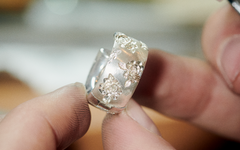
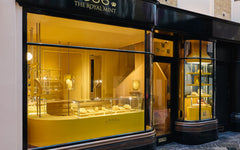
At 886 by The Royal Mint, we work with reclaimed gold because the material already has this capacity for continuation.
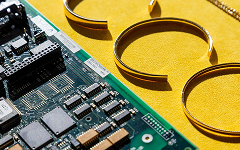
Our gold is recovered from existing sources, including electronic waste, and refined before being made into new jewellery. The process doesn't create new gold. It gives existing gold another form.
That makes the idea of permanence more interesting.
A new piece of jewellery doesn't necessarily require new material.
The gold in an Aurum piece has already existed elsewhere. Its previous form may be unknown, but the material itself continues. It can be worked, worn, passed on and eventually reclaimed again.
What gold means now
The significance of gold has changed over time, but its fundamental qualities haven't.
It remains a material that can hold value, withstand wear and move between generations. What changes is the object we choose to make from it — and the meaning we give that object once it becomes ours.
Perhaps that is the real weight of gold.
Not simply what it is worth, but what it can carry.
History. Memory. Craft. Association.
And, eventually, another life.


